
Dr. Panda Bath Time
Dr. PandaEducational
3.815.00 Reviews
- Version
- 26.3.41
- Installs
- 50.00K
- Age Rating
- Everyone
Screenshots
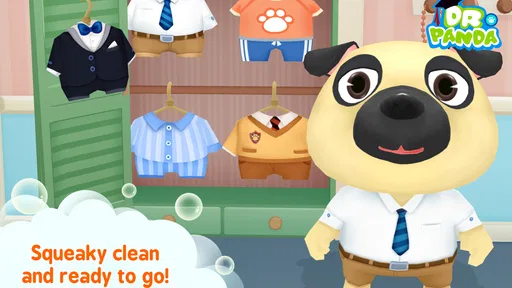
Our Review of Dr. Panda Bath Time
 Analysis by Appyee
Bathing is one of those everyday routines that can feel surprisingly difficult for a young child. It involves water, soap, hair washing, drying, and a fair amount of waiting, so a playful explanation can make the whole process feel less unfamiliar. After spending time with Dr. Panda Bath Time, I found that its most useful idea is not simply letting children tap through a cute bath scene. Its real value is turning hygiene into a gentle sequence of small actions that children can recognize from their own routine.
This is an educational game from Dr. Panda, aimed at everyone and priced at $3.99. It has a 3.8 average from around 274 ratings, with over 50 thousand installs. Those figures suggest a modest but established audience rather than a huge mainstream hit. I would describe it as a focused activity for younger children, especially those who respond better to pretend play than to direct reminders about washing.
Making a familiar routine easier to understand
I like to begin with the question of what a child can do in the first few minutes, because that reveals whether a routine-themed game feels inviting or like another lesson. Here, the bath setting gives play an immediate, recognizable purpose, so a parent can let a child explore before adding explanations. That low-pressure start also makes it easier to notice what the child understands on their own.
The capability that matters most
The central strength here is the way the game presents health and hygiene through playful interaction. Instead of explaining cleanliness as a list of rules, it gives the child a character and a bath-time setting to explore. That change in framing matters. A child who ignores “go wash your hands” may still be interested in helping a friendly animal get ready, use bath items, and finish the routine.
I found this approach more useful for building recognition than for teaching a complete lesson. The game can help a child connect objects and actions: water belongs with bathing, soap belongs with cleaning, and drying is part of finishing. Those connections are simple, but they are exactly the kind of repeated associations that make a real-world routine less abstract.
The strongest feature is the conversion of hygiene into a sequence a child can act out. That makes the experience approachable for children who are still learning why personal care matters. It also gives parents a shared subject to talk about without turning every bath into a correction or argument.
There is an important distinction, though. I would not use this as a replacement for explaining real hygiene habits. It works best as a friendly introduction and conversation starter. A child can enjoy a virtual bath without automatically understanding how much soap to use, how to rinse properly, or why an adult may need to help with hair washing. The learning benefit comes from combining play with a short real-life explanation afterward.
What the interaction feels like
The experience is designed around exploration rather than pressure. Children can engage with the bath-time situation at their own pace, which makes it less demanding than a lesson with correct answers or a timer. That freedom is valuable for preschool-age players who may become frustrated when an educational app feels like a test.
In practice, I would sit nearby the first time rather than hand over the device and leave. A child may understand the basic idea quickly but still need help connecting an on-screen action with the real routine. When the character is being cleaned, I can ask, “What do we do next when you are in the bath?” That turns passive tapping into a small conversation about order and purpose.
The open-ended style also means the game does not force every child through the same rhythm. One child may focus on the character, while another may be more interested in the objects around the bath. That flexibility is a benefit for short sessions, but it also means parents should not expect a tightly structured lesson with a clear beginning, quiz, and score at the end.
How I would use it before a real bath
A practical routine is to play for a few minutes before bath time, then point out one matching step in the bathroom. For example, after the child explores washing in the game, I would ask them to find the soap at home. Afterward, I would let them describe what the character did first and what happened next. This keeps the app connected to daily life instead of treating it as an isolated screen activity.
A second useful approach is to let the child lead. Rather than correcting every tap, I would ask the child to show me how the character gets clean. Their choices reveal what they already understand and where they need a little guidance. That makes the game useful as an observation tool for parents, not just entertainment.
I also found that it is better suited to calm, short visits than to long sessions. Its subject is familiar and its learning goal is narrow, so extending play far beyond the child’s interest can make it feel repetitive. The app has more educational impact when it supports a real conversation than when it is used as a way to occupy a child for a long stretch.
Where it fits in a family’s routine
I find the most useful place for a game like this is not necessarily during the bath itself, but in a quiet moment before the household is ready to wash up. A brief visit can give a child a familiar reference point without competing with the practical work of getting ready. From there, it is worth considering how well that role fits alongside the family’s usual routines and other activities.
The best everyday scenario
The clearest use case is a child who resists bath time because the routine feels unpredictable. Imagine a preschooler who is happy to play but becomes upset when asked to stop, undress, wash, or rinse. A parent could introduce the game earlier in the day, explore the steps together, and then refer back to that play when the real bath begins. The virtual setting gives the child a low-pressure rehearsal before the more complicated real situation.
This can also help after a change in routine. If a child is moving from quick washing to a more complete bath, the game offers a familiar way to discuss what is happening. I would not promise that it will eliminate resistance, but it can give the child words and images for a routine that previously felt like a series of interruptions.
Another good moment is when a child starts asking why people wash. Rather than giving a long explanation about germs, parents can use the game as a starting point and then add the missing real-world detail. The child can learn that playtime and hygiene are not opposites: washing helps us look after our bodies, and it can still be part of a pleasant routine.
Using it with siblings or an adult
The game is most effective when an adult participates occasionally. A younger child may enjoy showing a parent what to do, which reverses the usual dynamic and gives the child a sense of control. A sibling can also watch and ask questions, although I would keep the session cooperative rather than turning it into a competition.
For a child who is beginning to play independently, the app can provide a safe, simple activity without demanding reading skills. That is one of its practical advantages over many educational games built around written instructions. The parent’s role can gradually become lighter: demonstrate the idea once, ask a question later, and let the child explore alone when appropriate.
Still, supervision is useful for younger players. The game’s playful freedom is not the same as a detailed tutorial. If the child is using it to prepare for an actual bath, an adult should remain responsible for safety, water temperature, supervision, and the parts of washing that children cannot manage alone. No digital activity should be treated as permission to leave a child unattended near water.
What it teaches well, and what it does not
It teaches the emotional and conceptual side of hygiene well: bathing can be familiar, manageable, and even fun. It is also good at encouraging children to notice the order of a routine. Those are meaningful foundations, particularly for a child who reacts negatively to direct instructions.
Its limits are just as important. It does not turn a child into an expert on health, and I would not rely on it to teach precise technique. Real bathing includes details that are difficult to represent through simple play, such as rinsing thoroughly, avoiding the eyes, dealing with sensitive skin, and knowing when an adult needs to step in. Parents still need to teach those points in ordinary language.
Compared with a cartoon video about cleanliness, this game gives the child more agency. The child is doing something rather than only watching a character explain. Compared with a structured learning app with quizzes, letters, or numbers, it offers less measurable progress. That trade-off is deliberate: the experience is better for role-play and routine familiarity than for assessment.
Trade-offs that may affect your decision
The narrow subject is both the reason to buy it and the main reason to skip it. If your child is currently struggling with bathing, the focus is helpful because the app stays relevant. If you want one educational game covering language, counting, science, and creative play, this will feel limited. It is a single-purpose purchase rather than a broad activity collection.
The $3.99 price is reasonable for a parent who expects to use it as a recurring conversation tool, but it is harder to justify if the child has no interest in bath-related pretend play. I would think of it as a small targeted resource, not an app that will provide months of varied challenges.
The 3.8 average indicates a mixed but generally workable reception. I would not read that number as a guarantee that every child will connect with it. Children differ widely in how they respond to open-ended play. Some enjoy exploring without instructions; others need clear goals, rewards, or a story to stay interested. For the second group, a more structured educational title may hold attention better.
There is also a screen-time trade-off. Because the game makes hygiene entertaining, a child may ask to play when the real goal is to get ready for bed. I would set the purpose before opening it: explore the bath routine briefly, then move to the actual routine. Used that way, the app supports the transition. Used without boundaries, it can become another distraction.
Device and version considerations
The current version is 26.3.41, and it requires Android 7.0 or later. That makes checking an older family device worthwhile before purchasing. On a compatible phone or tablet, I would also test the controls with the child present, since a small screen can make exploratory tapping less comfortable for young hands than a larger tablet.
Because this is a game for young children, the age label of Everyone is reassuring for families looking for an uncomplicated subject. Even so, an age label does not tell you whether the pace, visual style, or degree of freedom matches your particular child. I would watch the first session and see whether the child understands the interaction without becoming frustrated.
Who will get the most from it
I would judge the fit by a child’s response to pretend play, rather than by age alone: some children enjoy exploring a familiar task, while others look for clearer challenges and rewards. A parent can learn a lot from watching whether the child returns to the bath scene or needs help staying engaged. That distinction helps clarify who is most likely to value the game and who may prefer a different kind of activity.
A strong match for routine-building
I would recommend it most to parents of young children who need help making bath time feel predictable. It is especially suitable when the child enjoys pretend play, likes caring for characters, or responds poorly to explanations that sound like instructions. The game’s gentle format gives those children a chance to rehearse a routine while feeling that they are playing.
It can also suit families looking for an educational activity with a clear real-life connection. Many children’s games teach skills that are useful but distant from the child’s immediate day. Here, the subject can be applied the same day, which makes it easier for a parent to reinforce the lesson naturally.
Teachers, childcare workers, or relatives may also find it useful as a conversation prompt, provided they treat it as a supplement rather than a complete hygiene lesson. Asking a child to explain what the character is doing can reveal understanding without making the child feel examined.
Who should choose something else
I would skip it if your child already enjoys bath time and you are mainly searching for a broad educational game. The focused theme may not offer enough variety for that purpose. I would also look elsewhere if your child needs explicit goals, levels, puzzles, or progress tracking to remain engaged.
It is not the best choice for a child who is ready for detailed health education. Older children may want explanations about germs, body care, or personal responsibility that go beyond playful bath-time actions. In that situation, a more advanced educational resource, combined with a parent’s explanation, would be more appropriate.
I would also avoid presenting it as a reward that must be earned before washing. That can accidentally make hygiene seem like an unpleasant task and the game the real prize. A better approach is to use it briefly as preparation, then praise the child for participating in the real routine.
My buying advice
Before paying, I would ask one question: does my child need a playful bridge into bathing? If the answer is yes, the focused design makes sense. The app’s value is not the amount of content but the way it gives a child a safe, familiar rehearsal of personal care.
If you do buy it, I suggest starting with a parent-led session, connecting one game action to one real bath step, and keeping the first visits short. Let the child demonstrate what they understand, then fill in the practical details that a game cannot cover. That workflow extracts more learning than simply handing over the device.
My overall view is positive but specific. Dr. Panda Bath Time is not a complete hygiene curriculum and it is not a replacement for supervision or real instruction. It is a focused educational game that can make a potentially difficult routine easier to discuss and less intimidating to a young child. For families facing that exact challenge, I think it is a worthwhile, modest purchase. For everyone else, its narrow purpose means a broader children’s game may offer better value.
Verdict
Strengths of Dr. Panda Bath Time
- Simple controls make it easy for young children to play independently.
- Gentle animations and sounds create a calm, child-friendly experience.
- Short activities suit toddlers with limited attention spans.
- No reading skills are needed to understand the main interactions.
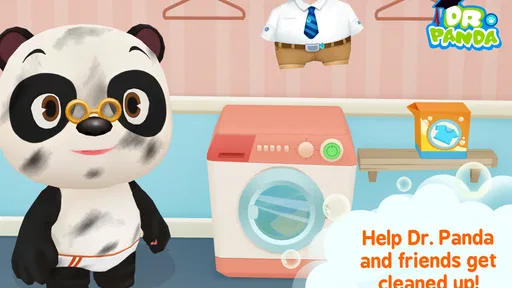
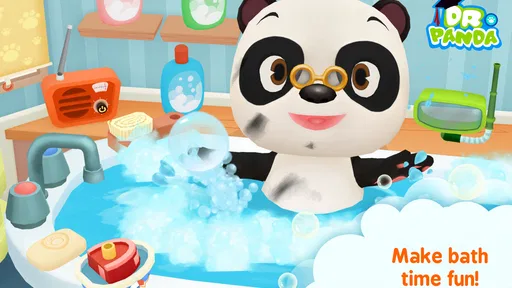
- Encourages pretend play through washing, drying, and dressing characters.
Limitations of Dr. Panda Bath Time
- The gameplay can feel repetitive after several sessions.
- Limited activities may not hold the interest of older children.
- Some features or items may require an in-app purchase.
- Parents may want more meaningful learning content beyond basic routines.
- Performance can vary on older devices with limited storage or power.
Other Releases by Dr. Panda
View All
Dr. Panda Train
Educational3.7

Dr. Panda Restaurant
Educational3.9

Dr. Panda Restaurant 2
Educational4.1

Dr. Panda Racers
Racing3.9
Similar Picks in This Category
View All
Little Panda Policeman
BabyBus4.0

Monster Trucks Game for Kids 2
Raz Games4.1

Little Panda's Chinese Recipes
BabyBus4.4

Little Panda's Restaurant
BabyBus4.4

Little Panda's Ice Cream Games
BabyBus4.3

Baby Panda Care
BabyBus3.8
Frequently Asked Questions
What is Dr. Panda Bath Time?
Dr. Panda Bath Time is an interactive children’s game focused on bath-time routines and playful exploration. Children can choose a character, help them get clean, and interact with objects such as soap, shampoo, towels, and bath toys. The experience is designed to be simple and entertaining, with no complicated controls or demanding objectives, making it suitable for younger players who enjoy pretend play.
Is Dr. Panda Bath Time suitable for young children?
The game is generally aimed at preschool-aged children and is built around easy touch controls, colorful visuals, and friendly characters. There are no difficult levels or fast reactions required, so children can explore at their own pace. Parents should still check the current age rating on the Google Play Store or App Store, since ratings and available features may vary by platform and region.
Does Dr. Panda Bath Time require an internet connection?
Dr. Panda Bath Time is primarily a self-contained play experience, so the main activities can typically be enjoyed without a constant internet connection after installation. An internet connection may still be needed for downloading the app, receiving updates, restoring purchases, or accessing store-related functions. For travel or offline play, it is best to open the game once beforehand and confirm that everything works as expected.
Does the game contain advertisements or in-app purchases?
Parents should review the store listing before downloading because monetization details can differ between versions, operating systems, and regional releases. Dr. Panda’s children’s titles are commonly designed with a child-friendly approach, but store links, optional purchases, or parental sections may still be present. To avoid accidental transactions, adults should use device-level purchase restrictions and supervise the initial setup.
What can children learn or practice while playing Dr. Panda Bath Time?
The game is mainly intended for imaginative play rather than formal education, but it can help children become familiar with everyday bath-time steps and personal-care objects. By choosing actions, observing reactions, and repeating routines, children may practice sequencing, hand-eye coordination, and independent decision-making. It works best as a playful supplement to real-life hygiene guidance, not as a replacement for adult supervision or instruction.
Play our best games!


